
At a glance
Warm white vs RGB, side by side
| Warm white (2700K) | RGB / colour-changing | |
|---|---|---|
| Everyday look | Natural, upscale | Can look theatrical if overused |
| Trees & planting | Ideal | Greens and reds can look unnatural |
| Holidays & game days | No | Yes — any colour |
| Brightness per watt | High | Lower in white mode |
| Controls | Timer or photocell | App or controller |
| Best place | Landscape, facade, paths | Rooflines, water features, accents |
Combine them properly
Colour-changing fixtures have become far better and cheaper, and it is tempting to put RGB everywhere. On a landscape it rarely looks good for long: coloured light flattens foliage and makes a house look like an attraction rather than a home. A matched warm white — 2700K, with 3000K where heavy green planting needs it — is what gives a premium property its look 360 nights a year.
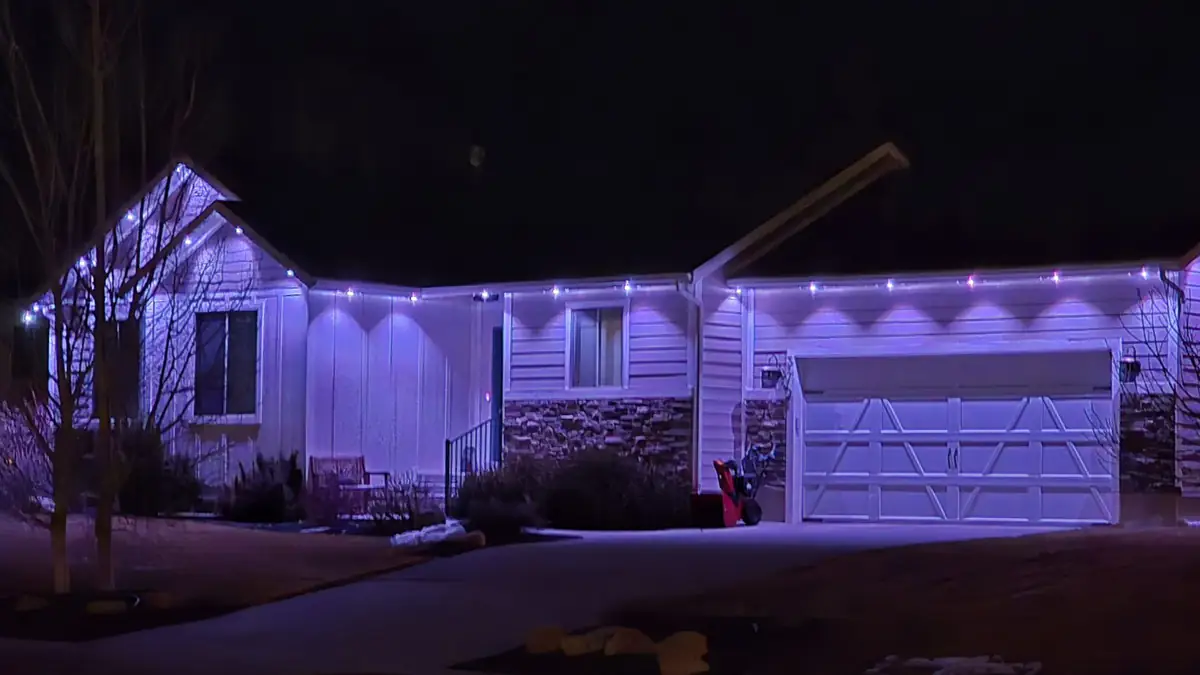
Colour has its place on the roofline, where permanent lighting runs soft white most nights and switches to full colour for Christmas, July 4th or game day without anyone climbing a ladder. Accent colour also works on fountains and pool features. Designing both together, on one control system, gives you a warm-white home every evening and colour when you want it. More in our guide to colour temperature.
Answers
Colour questions
Can RGB fixtures produce a good warm white?
Many modern fixtures with a dedicated white channel can, but a true warm-white fixture is still brighter and more consistent for everyday landscape lighting.
Is permanent roofline lighting RGB?
Yes, typically — it is designed to switch between soft white and full colour.
Does colour lighting bother neighbours?
It can if it spills. Shielded fixtures and sensible schedules keep it on your property.
Free, no obligation
See warm white and colour on your home
We show both after dark so you can decide where each belongs.
- (832) 303-0428
- ambianceoutdoorlights@gmail.com
- Houston, Texas