
How to read these photos
What you are actually looking at
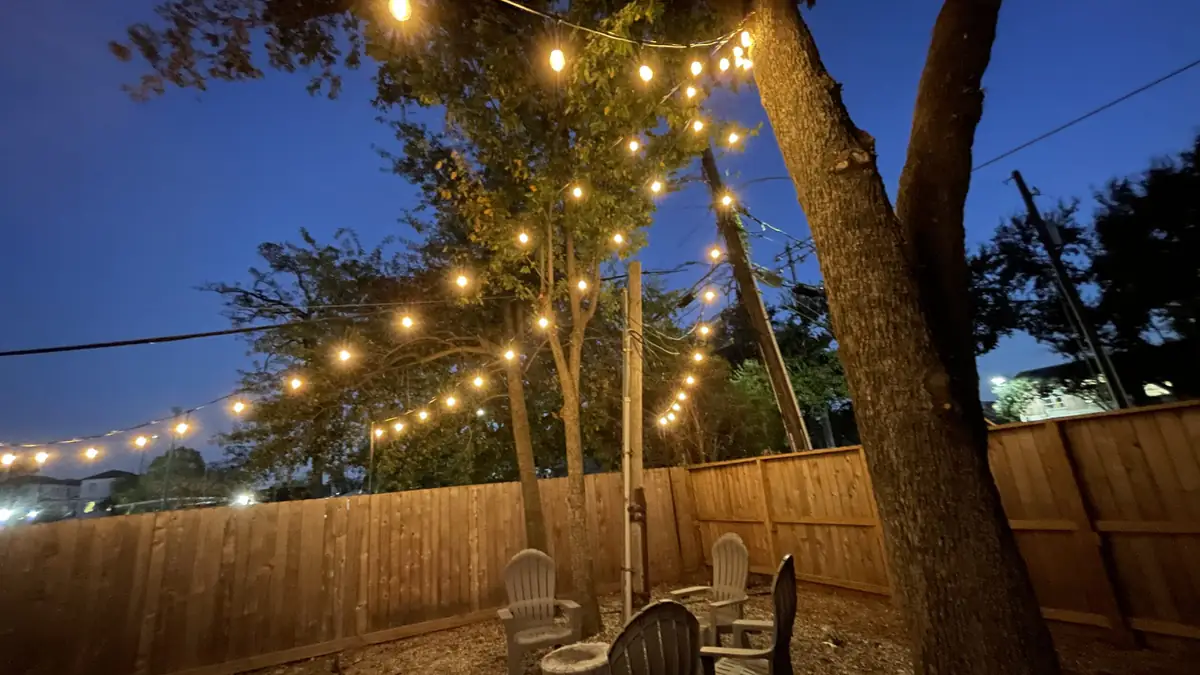
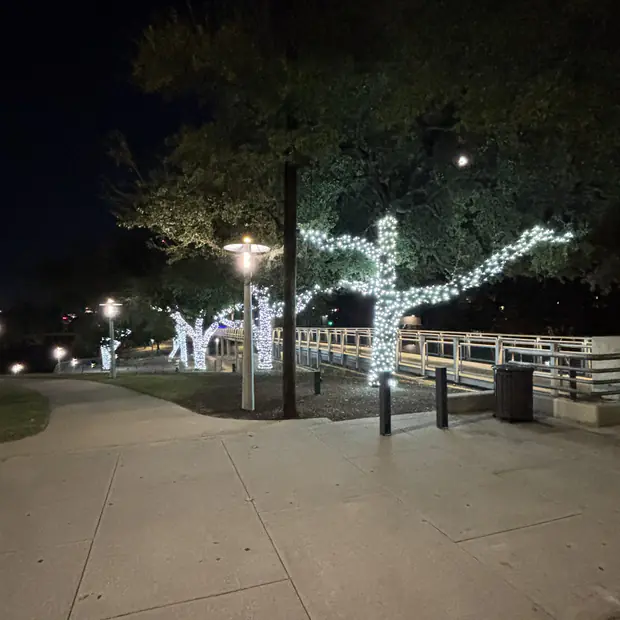
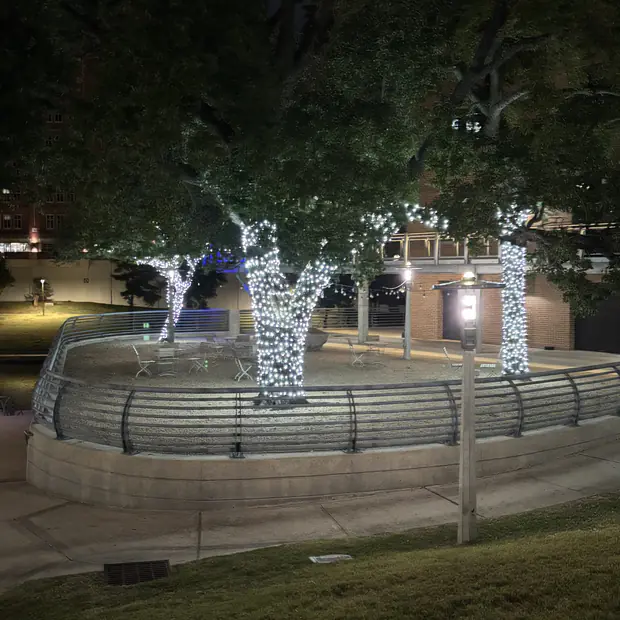
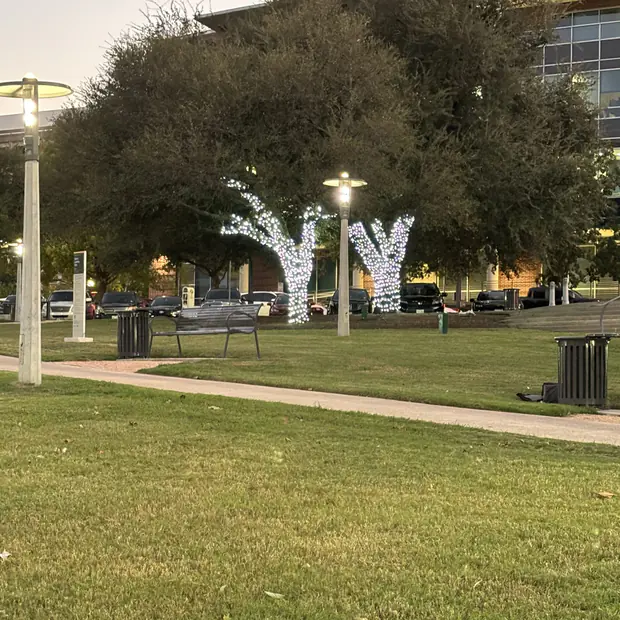
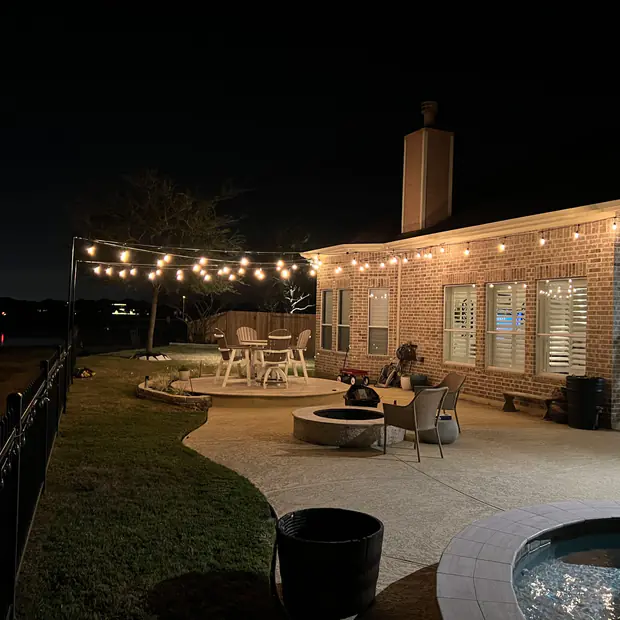
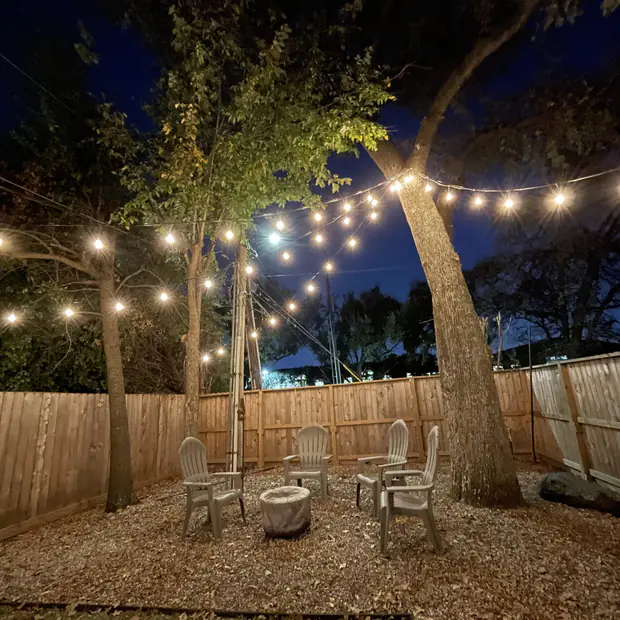
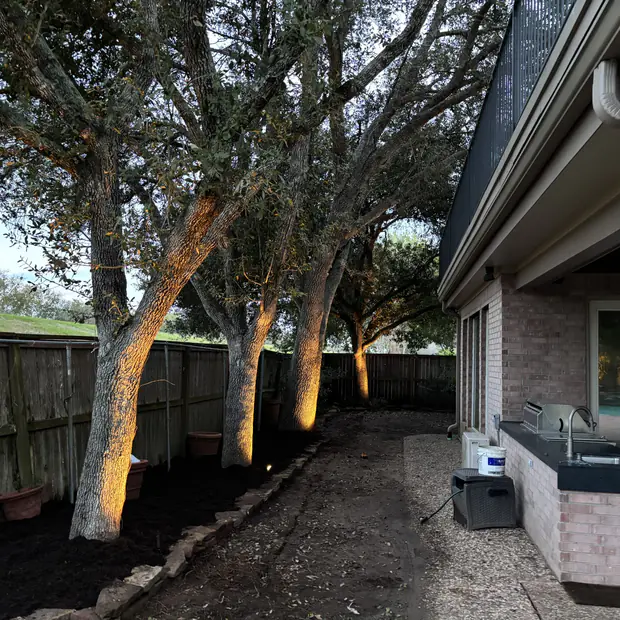
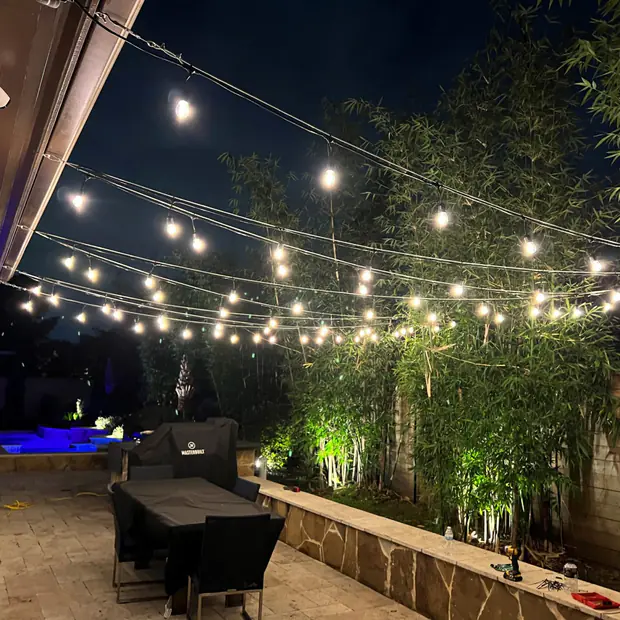
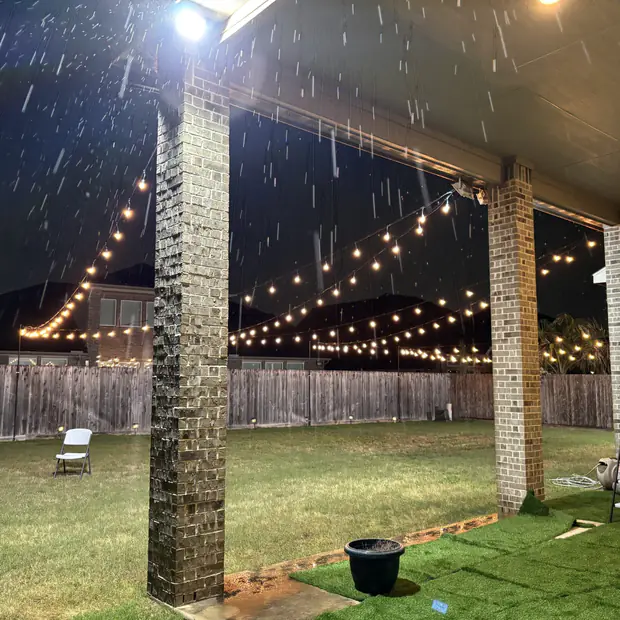
Every image on this page was photographed on a finished job in the Houston area, outdoors, at dusk or after dark, with the system running as the homeowner sees it every night. Nothing here is a manufacturer render and nothing has had light painted into it afterwards. That matters more than it sounds: a large share of the lighting photography you will find online is supplied by fixture manufacturers, shot on a studio set or built in software, and it sets an expectation no installer can actually hit on a real house with real trees in front of it.
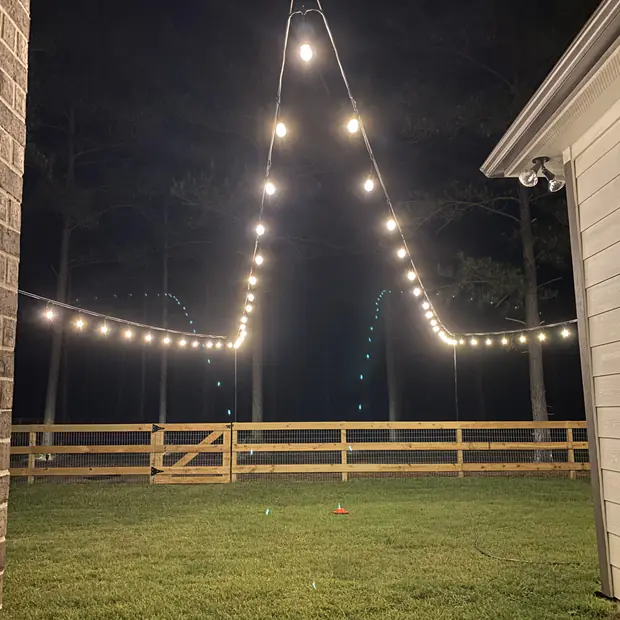
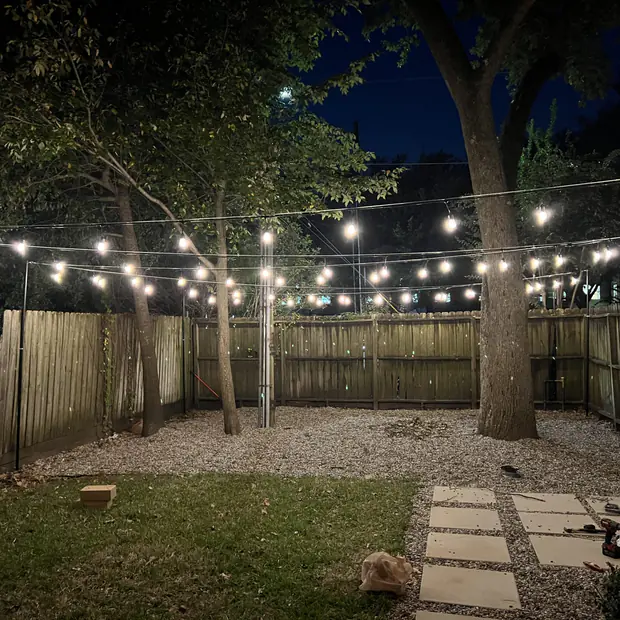
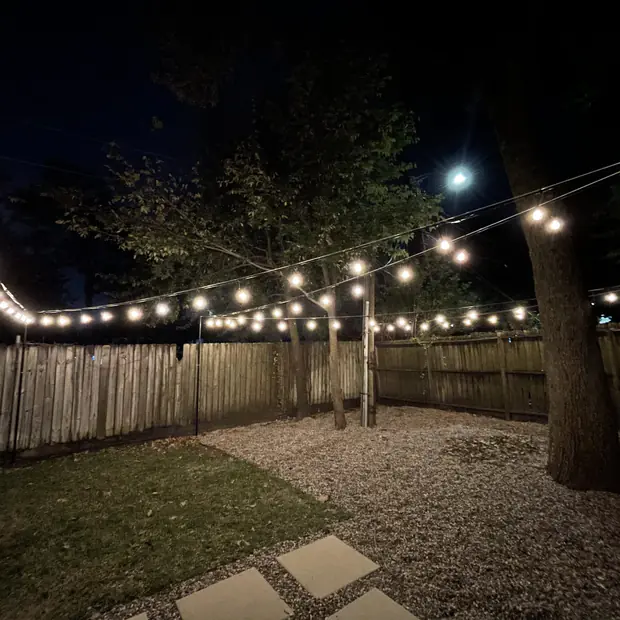
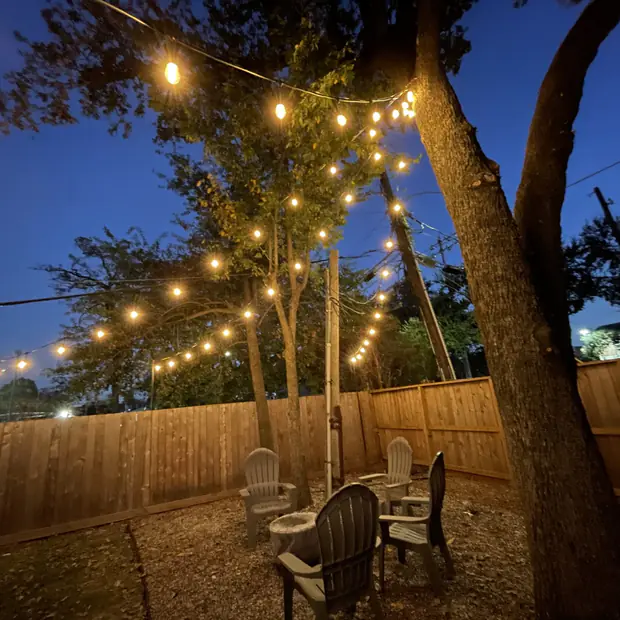
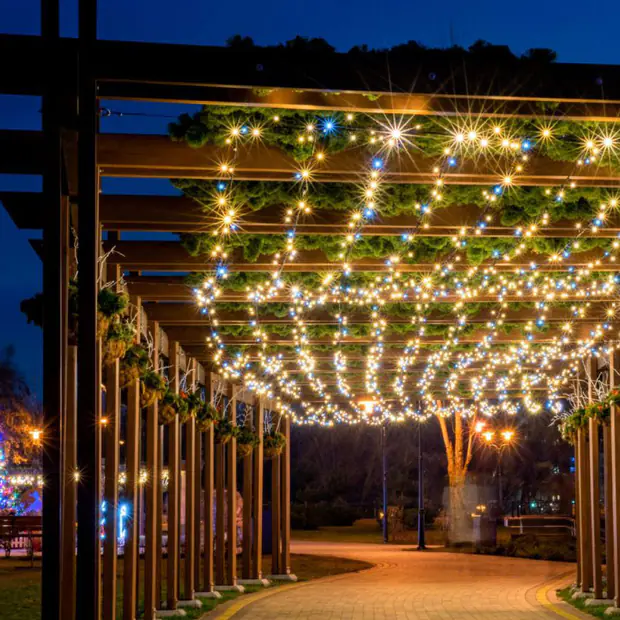
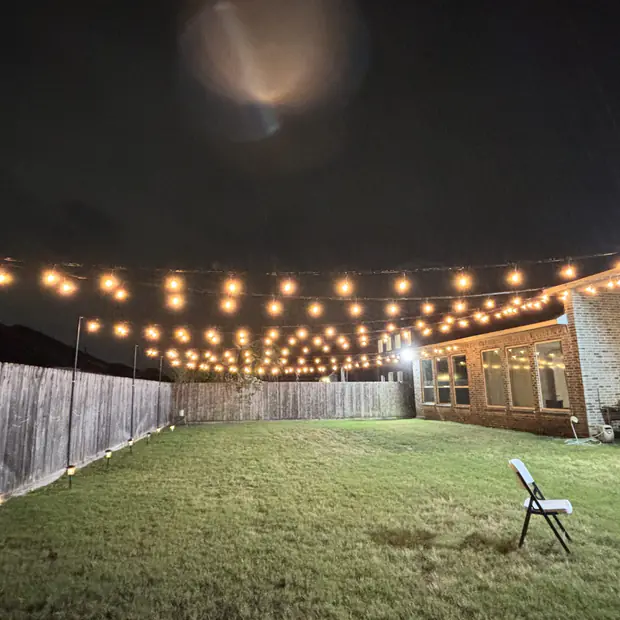
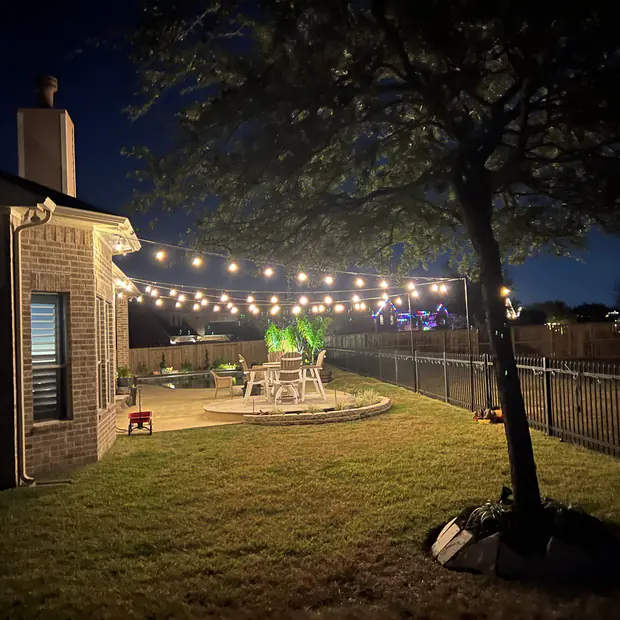
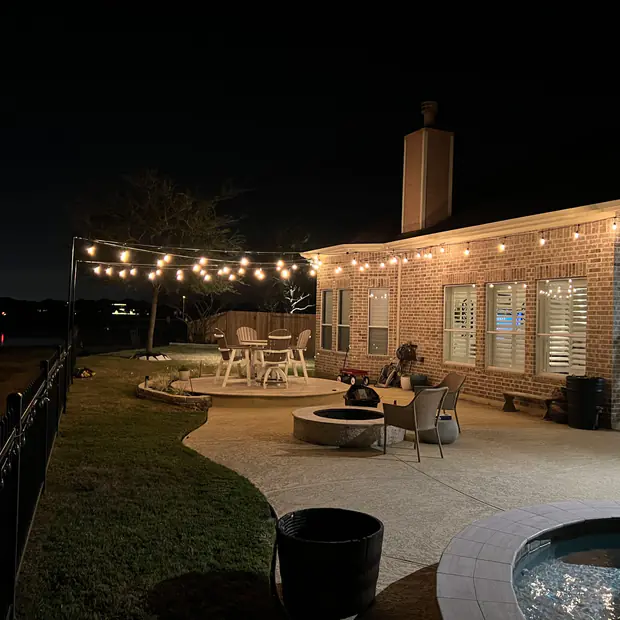
Most of what you see is built from four or five techniques used in combination. Uplighting puts a fixture at the base of a tree or a wall and throws light up the trunk or the facade, which is what gives a house its shape after dark. Moonlighting reverses that: fixtures go high in an oak canopy and cast dappled light down through the branches onto a lawn or driveway, so the light looks like it is coming from the sky rather than from the ground. Grazing sets a fixture close and tight against brick, limestone or stucco so the beam skims the surface and every bit of texture reads. Path washing uses low fixtures that pool light onto the walking surface instead of lining a route with bright dots like a runway. Overhead, bistro spans carry warm bulbs on a catenary cable between anchor points, which is what turns an open lawn or pool deck into a room.
Colour temperature is the quietest decision in any of these photos and the one homeowners notice most once it is pointed out. Almost everything here runs at 2700K, a warm white that flatters brick, limestone and skin tone, with a slightly cooler 3000K used selectively on heavy green planting where warm light can turn foliage muddy. The reason every photo looks coherent is that the temperature never changes halfway across a property. Mixed colour temperature — usually the result of replacing failed bulbs a few at a time with whatever the hardware store had — is the single most common reason an older system looks wrong even when every fixture is working. If you want the detail behind that choice, the guide on colour temperature for landscape lighting covers it properly.
Houston shapes the hardware in these pictures too. The heat, the humidity and the summer storms are hard on cheap fixtures, so what is installed here is solid brass and copper rather than painted aluminium, run on a low-voltage 12V system with the transformer mounted clear of any bed that floods. Fixtures in planting beds are set so that a season of growth does not bury them, and canopy fixtures are mounted with the cable slack enough that the tree can move in a storm without tearing the run. A typical residential project on this page runs somewhere between eighteen and forty fixtures, which is where most Houston homes of two to four thousand square feet land once the front elevation, the specimen trees and the back garden are all covered.
Landscape
Landscape & uplighting
Bistro
Bistro & string lighting
Outdoor living
Patios, pools & gardens
Common questions
Questions about the work in these photos
Can you reproduce a specific photo on my property?
Usually a close version of it, yes — but the honest answer is that the photo is a starting point, not a specification. What carries across is the technique and the feel: the same warm 2700K light, the same habit of hiding the fixture and showing only what it lights. What changes is the geometry of your house, how mature your trees are, where the beds and hardscape sit and where power is available. Bring the photo to the design visit and you will get a straight answer about which parts transfer directly and which need a different approach.
Are these really your own installations?
Yes. Every photograph on this page is a system Elwin Brown and this crew designed, installed and aimed in the Houston area. Nothing is licensed stock, nothing is a manufacturer render and nothing is another company’s portfolio. It is worth asking any lighting contractor you speak to for the same assurance, because borrowed portfolios are common in this trade.
Will my house actually look like this at night?
These are shot in the window from late dusk into full dark, which is when a lit property looks its best and also when you will be looking at it most evenings. The one thing a photograph flattens is contrast — your eye handles the range between a bright uplit trunk and a dark lawn better than a camera does, so in person the effect is usually softer and more natural than the picture suggests, not harsher.
How many fixtures does a home like these take?
Most of the homes shown here run between eighteen and forty fixtures. A front elevation with a couple of specimen trees and a walkway is often twelve to eighteen. Adding the back garden, a pool surround or bistro spans typically pushes it into the high twenties or thirties. Fixture count is only part of the cost — transformer sizing, wire runs and how far the runs have to be trenched matter just as much. The pricing page sets out the ranges honestly.
Do you have before-and-after comparisons?
For repair and restoration work, yes — that is where the contrast is most useful, because you are usually looking at a tired system with mixed bulb colours and half the fixtures dark. Ask when you call and we will show you the relevant ones for your situation. For new installations the useful comparison is the night demo, where you see your own property before and after with the fixtures actually placed.
Can I see one of these systems in person?
Often, yes. Several of these homeowners are happy for prospective clients to drive past after dark, and we will point you at the ones nearest you once we know where you are. It is the fastest way to settle any doubt about brightness, colour and how the light sits on a real house rather than in a photograph.
Services
See the service behind the work
Free, no obligation
Want something like this?
Show us the photo you like and we will tell you what it would take on your property.
- (832) 303-0428
- ambianceoutdoorlights@gmail.com
- Houston, Texas