At a glance
Which beam for which feature
| Spot (narrow) | Flood (wide) | |
|---|---|---|
| Tall palms | Yes — reaches the crown | Wastes light at the base |
| Wide live oak canopy | For the trunk | For the canopy spread |
| Columns & narrow walls | Yes | Too broad |
| Facade & wide walls | Creates scallops | Even wash |
| Shrubs & beds | Too harsh | Yes |
| Reach | Further, more intense | Shorter, softer |
Why one-size beams look flat
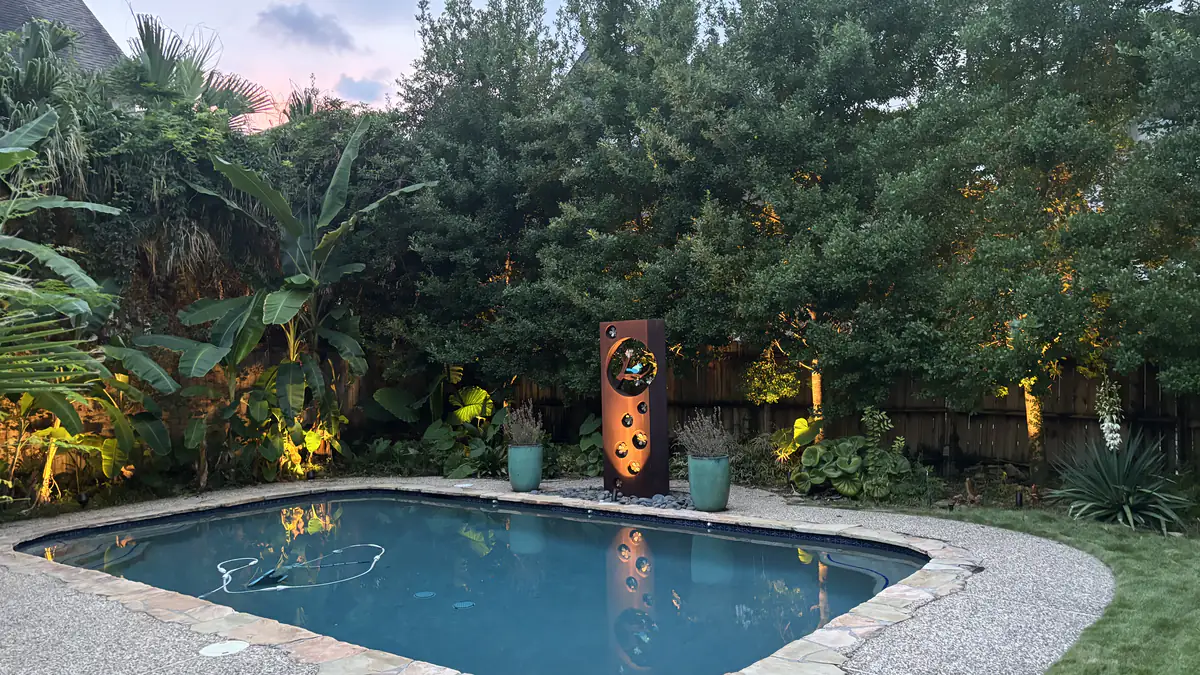
Retail kits ship every fixture with the same medium beam, which is why kit-lit gardens look uniform and flat. A designed system mixes beams: a narrow spot drives light up a palm trunk to the fronds, a pair of floods washes a wide oak canopy, and a medium beam grazes a stone column. The same wattage can look dramatically different depending on the optic.
Beam choice is settled on the night demo, not on paper. We try different lamps and lenses in place, with you watching, until each tree reads in three dimensions without spilling light into windows or onto the neighbour’s house. Replaceable lamps make it easy to adjust later as plants grow — see integrated vs replaceable LED — and the technique side is covered in uplighting vs moonlighting. It is all part of our landscape lighting design process.
Answers
Beam angle questions
What beam angle is best for uplighting trees?
It depends on shape: narrow for tall, slim trees and palms; wide for broad canopies. Large trees often use both.
Can I change the beam after installation?
With replaceable lamps or interchangeable lenses, yes — one reason we prefer them.
Does a narrow beam need more power?
No. The same wattage simply concentrates the light in a smaller area, so it reaches further.
Free, no obligation
See the beams on your own trees
We test spot and flood optics in place after dark so you see the difference before you buy.
- (832) 303-0428
- ambianceoutdoorlights@gmail.com
- Houston, Texas